In 2024, a video went viral on social media. We see a man in tears, sitting in front of his screen, “conversing” with his father who died three years earlier. Thanks to theartificial intelligence, a chatbot had been trained on hundreds of messages, emails and voice recordings of the deceased, reproducing his style, humor and favorite expressions.
This scene, unthinkable ten years ago, is now a technological reality. But is this progress or a drift? Thedigital immortalityis it the future of memory, or a dangerous mirage?
How does digital immortality work?
The basic principle
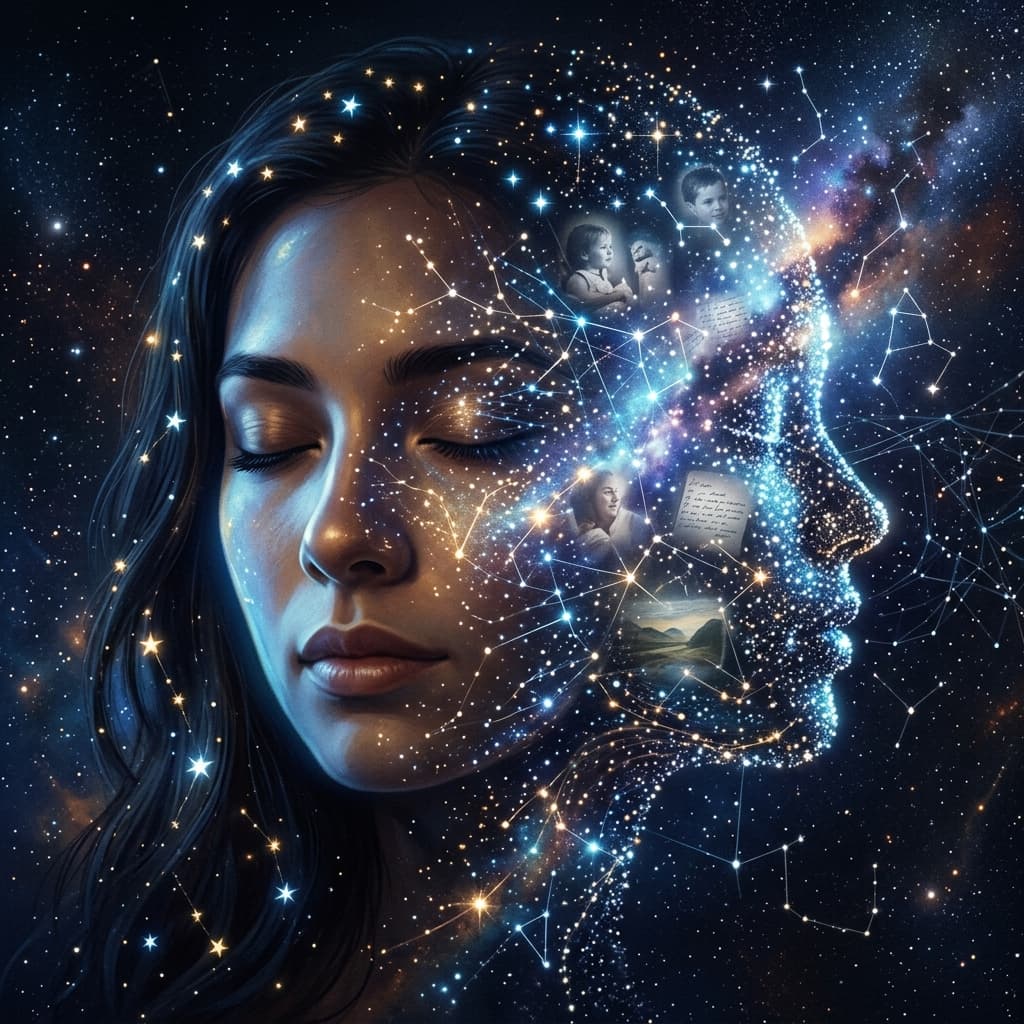
The idea is simple: collect as much data as possible about a person – their writings, their voice messages, their videos, their linguistic habits – and use it to train an artificial intelligence model capable ofsimulatehis personality after his death.
The technologies involved
- Large Language Models (LLM): AIs like GPT or LLaMA, refined (fine-tuned) on the personal data of the deceased.
- Speech synthesis: Tools like ElevenLabs can clone a voice from a few minutes of recording.
- Video deepfakes: Algorithms capable of generating a realistic video of a person's face, synchronized with a cloned voice.
- 3D avatars: Real-time digital representations with which we can interact.
Market players
Several companies have positioned themselves in this niche:
- HereAfter AI(USA): Records biographical conversations during the person's lifetime
- StoryFile(USA): Creates interactive videos where you can ask questions of the deceased
- Eternos.life(Europe): Offers a conversational avatar based on memories
The arguments in favor of digital immortality
Preserving the wisdom of the ancients
Imagine being able to ask your great-grandmother a question about her life during the war. Or ask a missing father for advice. AI could become a tool forintergenerational transmissionunprecedented.
Thelife lessons from our grandparentsare often lost because no one collected them in time. AI offers a radical solution: record these lessons while they are alive and make them accessible for eternity.
Soften the mourning
For some people, especially those who have lost a loved one suddenly (accident, suicide, heart attack), the possibility of “speaking” to the deceased one last time can have a powerful therapeutic effect. Psychologists specializing intraumatic bereavementobserve that these tools can help formulate goodbyes that never happened.
Democratizing biography
Until now, only famous people were entitled to a biography. Digital immortality allows anyone to leave apersonal imprintaccessible to future generations.
The arguments against
The risk of “frozen mourning”
The psychologistTherese Randowarns: regularly interacting with an avatar of the deceased could prevent the natural grieving process. Instead of accepting the loss and reorganizing their life, the bereaved person remains in a state ofpermanent denial, maintained by technology.
Grief, as painful as it is, is a necessary process. Crossing it — rather than avoiding it — is what allowstransform absence into luminous presence.
The problem of consent
A dead person cannot give consent. Would he have wanted an AI to reproduce his words, his opinions, his jokes? That she “speaks” in his name to people he has never known? The question ofpost-mortem consentis an ethical field that is still largely unexplored.
The illusion of fidelity
An AI avatar is not the person. It's astatistical approximation. It reproduces linguistic patterns, not consciousness. He doesn't feel anything. He doesn't think. He doesn't love you. He simulates. And this simulation, as convincing as it may be, remains a distorting mirror of reality.
Risks of abuse
What happens if someone creates an avatar of a living person without their consent? Or what if an avatar is used to spread false information? The legal implications are dizzying.
The ethical approach: preserve without simulating
There is a happy medium between total oblivion and artificial immortality. This is the approach thatThe Posterity Project:preserve authentic memory without ever falsifying it.
What we preserve
- Thereal wordswritten by the person during their lifetime
- Thereal photos and videosthat she chose to share
- Thereal testimonialsof those who knew her
- Thereal messagesprogrammed via thetime capsules
What we refuse
- Create chatbots that “speak” on behalf of the deceased
- Generate content that the person has never written
- Simulating a personality from fragmentary data
We believe that thetruthof memory is more precious than its perfection. A real three-line message, written from the heart, is worth infinitely more than a two-hour conversation with an avatar who is just a shadow.
What you can do today
If the subject of digital immortality touches you, here are three concrete actions:
- Register your loved ones: A simple 10 minute voice recording with your grandmother recounting her childhood is worth more than any algorithm. Do it now.
- Write your own messages: Don't let an AI guess what you would have meant.Write it yourselfand schedule delivery.
- Preserve the authentic: Collect your family's photos, letters, videos in onesecure spacebefore they get lost in the twists and turns of a forgotten hard drive.
Digital immortality through AI is a seductive dream. But true immortality, the one that counts, lies in the authentic words we leave to those we love.