Grief in the digital age
Grief is one of humanity's most universal experiences. But the way we live it has profoundly changed with the internet. In the past, the death of a loved one was experienced in family intimacy, following religious or secular rituals. Today, grief extends online, on social media, memorial platforms, and digital remembrance spaces.
This phenomenon has a name: digital grief. And it now affects millions of people worldwide.
What is digital grief?
Digital grief refers to all grieving practices that take place online. This includes:
- Visiting a deceased person's profile on social media, rereading their posts, looking at their photos
- Writing to a deceased person by posting a message on their profile or in a dedicated memorial space
- Lighting a virtual candle or leaving an online tribute
- Attending virtual funerals broadcast via video conference
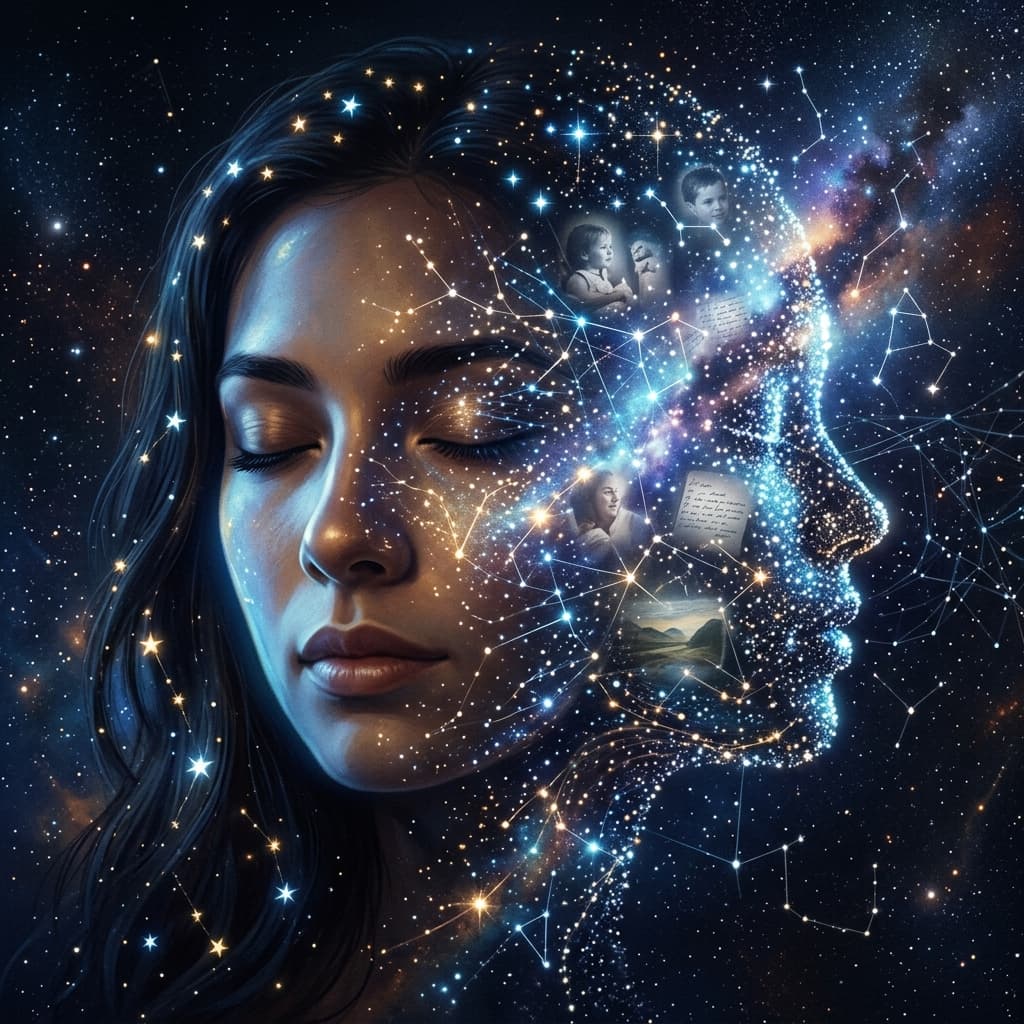
- Creating an online memorial gathering photos, videos, and testimonials
These practices don't replace "real" grief. They complement it, offering a space of emotional continuity in a world where physical distance often makes traditional remembrance difficult.
Social media facing death
Death is social media's great blind spot. Facebook now has more profiles of deceased people than some countries have in active population. Instagram preserves accounts as "memorials," while Twitter leaves profiles intact as long as no one reports the death.
These platforms were not designed for memory. They are noisy, algorithmic, and ephemeral. A precious memory sits alongside an advertisement, a video game notification, or a controversial comment. This lack of sacredness has driven many people to seek dedicated alternatives.
The emergence of digital remembrance spaces
Facing the limitations of social media, platforms dedicated to digital grief have emerged. Unlike general social networks, these spaces are designed for remembrance:
- No advertising — The memorial space remains sacred
- No algorithm — Memories are not sorted by engagement or popularity
- Prayer spaces — Some platforms, like Posterity, offer multi-faith prayer spaces (Christian, Jewish, Muslim, Buddhist, Hindu, and secular) to support remembrance according to each person's beliefs
- Guaranteed permanence — Data is stored securely and permanently, unlike social networks which can close or change their terms at any time
How virtual funerals changed our relationship with death
The 2020 pandemic accelerated the adoption of virtual funerals. What was unthinkable became common: entire families attending a ceremony via Zoom, distant loved ones finally able to participate in remembrance.
Beyond the pandemic, virtual funerals meet a real need. For a family scattered between Paris, Montreal, and Tokyo, the ability to gather online around a digital memorial isn't a poor substitute: it's obvious.
Coins on graves: between tradition and digital
Since antiquity, coins have been placed on graves. In Greek tradition, the coin allowed the deceased to pay Charon, the ferryman of the Styx. Today, this practice persists in many cultures with varied meanings: a mark of respect, a memory of a visit, or military tribute (in American tradition, a quarter indicates one served alongside the deceased).
The digital cemetery transposes this tradition: lighting a virtual candle, leaving a testimonial, or regularly returning to an online memorial are the modern equivalents of these ancestral gestures. The form changes, but the intention remains the same: showing that we remember.
Is digital grief healthy?
The question comes up regularly. Psychologists are generally favorable to digital grief, provided it doesn't become a substitute for real support. Consulting a deceased person's profile daily can be a natural step in the grieving process, but it shouldn't prevent the work of separation.
Well-designed digital remembrance spaces accompany the bereaved without trapping them. They offer a place of memory, not an obsession. They allow you to return for reflection when needed, without the pressure of notifications or news feeds.
The future of digital grief
Digital grief is not a passing trend. It's a natural evolution of a connected society seeking to give meaning to loss in a dematerialized world. As memory preservation technologies advance, digital grief will become an essential component of the grieving process — not replacing traditional rituals, but complementing them, so that no one is forgotten, regardless of distances and generations.